Pakistan 5G: How Faster Internet Could Transform AI, Cloud Computing and Business
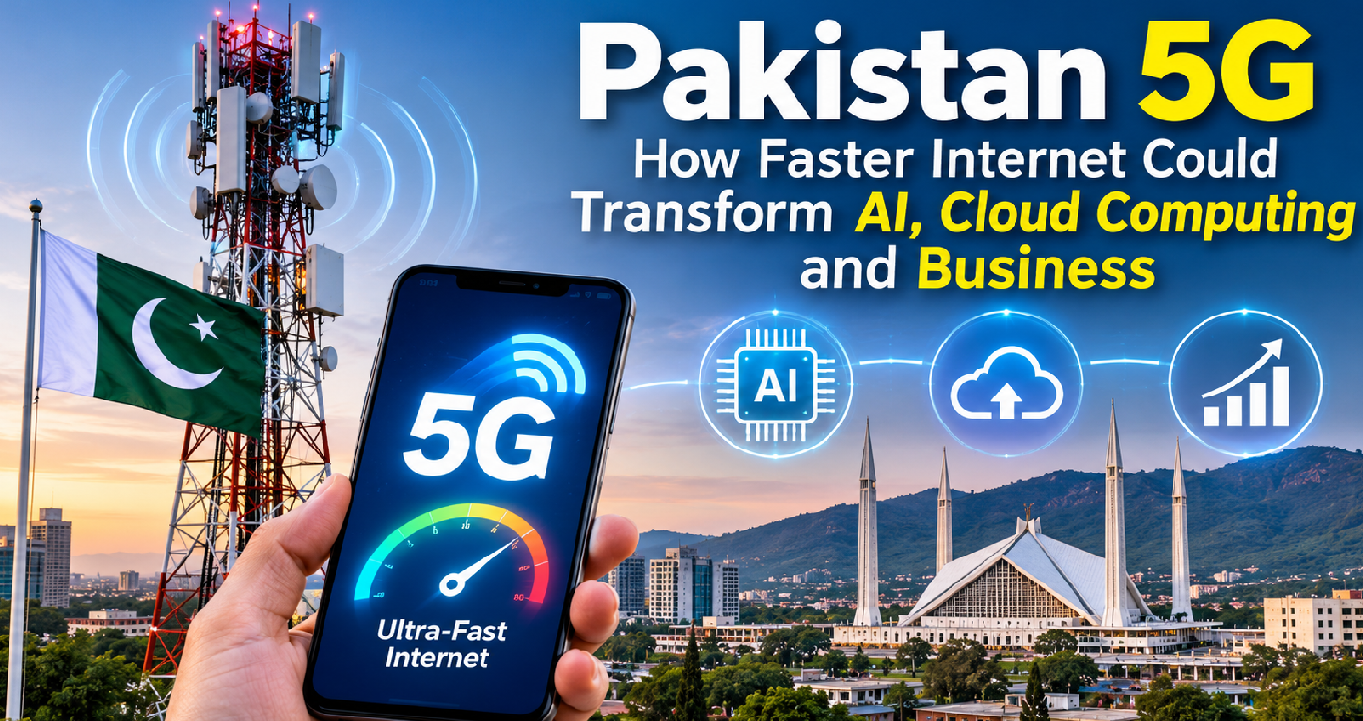
The conversation around Pakistan 5G is moving beyond faster mobile downloads.
As artificial intelligence, cloud computing and connected devices become increasingly important, 5G could become part of the country’s wider digital infrastructure.
Recent Pakistani technology coverage has highlighted the idea that 5G’s larger value could come from its role alongside cloud and AI rather than simply faster smartphone connections.
What Is 5G?
5G is the fifth generation of mobile network technology.
Compared with previous generations, it is designed to provide higher speeds, lower latency and support for a much larger number of connected devices.
For consumers, this could mean faster downloads and smoother streaming.
For businesses, the impact could be much broader.
How Could 5G Help AI in Pakistan?
Artificial intelligence increasingly depends on fast connectivity and access to cloud infrastructure.
Businesses may use AI for:
- Customer service
- Marketing
- Data analysis
- Automation
- Fraud detection
- Logistics
- Healthcare
- Education
Moreover, faster and more reliable connectivity could make cloud-based AI applications easier to access across different parts of Pakistan. For example, businesses could use AI-powered platforms for customer support, data analysis and automation. Consequently, companies may be able to improve productivity while reducing some routine tasks.
As AI adoption increases, individuals and businesses can explore different tools to improve productivity and automate everyday tasks. Check out our guide to Best Free AI Tools in 2026 to discover useful AI solutions for work, content creation and business.
Faster and more reliable connectivity could make cloud-based AI applications easier to use across different parts of the country.
5G and Pakistan’s Startup Ecosystem
Pakistan has a large technology and freelancing community.
Better connectivity could support:
- Remote workers
- Software companies
- Online education
- E-commerce
- Digital agencies
- SaaS startups
- Freelancers
- Content creators
For example, someone working remotely with international clients needs a stable internet connection to communicate effectively. Similarly, a freelancer uploading large projects may face delays when connectivity is unreliable.
Therefore, better internet access could improve productivity and create new opportunities for Pakistan’s growing freelance and startup communities.
5G Could Help Smart Businesses
5G could also support connected devices.
For example, businesses could use sensors to monitor equipment, vehicles and inventory.
Manufacturing companies could connect machines.
Logistics companies could track vehicles.
Agriculture businesses could potentially monitor farms through connected devices.
This is where 5G becomes more than a smartphone technology.
In addition, connected technology could help businesses monitor operations more efficiently. For instance, manufacturers could track machine performance, while logistics companies could monitor vehicle locations in real time. As a result, businesses may improve efficiency and reduce operational delays.
The Role of Cloud Computing
5G and cloud computing can complement each other. In particular, faster connectivity could allow devices to send information to cloud systems more efficiently.
Instead of requiring every device to perform complex calculations locally, applications can rely on cloud infrastructure for processing. This is especially useful for AI applications that require significant computing power.
This could be useful for AI applications that require significant computing power.
The combination of:
5G + Cloud + AI
could become an important part of Pakistan’s digital transformation.
Challenges Pakistan Must Solve
5G alone will not solve the country’s technology challenges.
Pakistan also needs:
- Affordable internet
- Reliable electricity
- Strong cybersecurity
- Digital skills
- Data centers
- Cloud infrastructure
- Investment
- Digital literacy
- Effective regulation
The Ministry of IT and Telecommunication has also highlighted digital transformation and AI-related initiatives in 2026.
What Could 5G Mean for Freelancers?
For freelancers, faster and more reliable mobile connectivity could improve remote work.
Graphic designers could upload large files more easily.
Video editors could transfer content faster.
Developers could work with cloud environments more reliably.
Digital marketers could manage campaigns from mobile devices.
This could be particularly important outside Pakistan’s largest technology centers.
The Future of Pakistan’s Digital Economy
Pakistan’s technology future will not depend on one technology.
AI, cloud computing, cybersecurity, digital payments, software development and high-speed connectivity will all play roles.
5G could become one layer connecting these technologies.
The real opportunity is therefore not simply faster mobile internet.
It is building a stronger digital economy around that connectivity.
Frequently Asked Questions
What is 5G in Pakistan?
5G is the fifth generation of mobile network technology. Compared with previous generations, it is designed to provide higher speeds, lower latency and support for a much larger number of connected devices.
As a result, consumers could enjoy faster downloads and smoother streaming. However, the benefits go beyond smartphones. For businesses, 5G could create opportunities to improve operations and adopt new digital technologies.
How can 5G help Pakistan?
5G could support remote work, AI, cloud computing, startups, smart devices, digital businesses and online services.
Can 5G improve freelancing in Pakistan?
Potentially. Faster and more reliable connectivity can make remote work, file transfers, video meetings and cloud applications easier to use.
Is 5G only useful for smartphones?
No. 5G can support connected devices, industrial applications, smart infrastructure and cloud-based services.
Will 5G help AI in Pakistan?
5G can support AI applications by improving connectivity to cloud services and connected devices, although AI growth also requires computing infrastructure, skills and investment.
Outbound source: Pakistan Ministry of IT & Telecommunication