Deepfake Voice Scams: How to Stay Safe
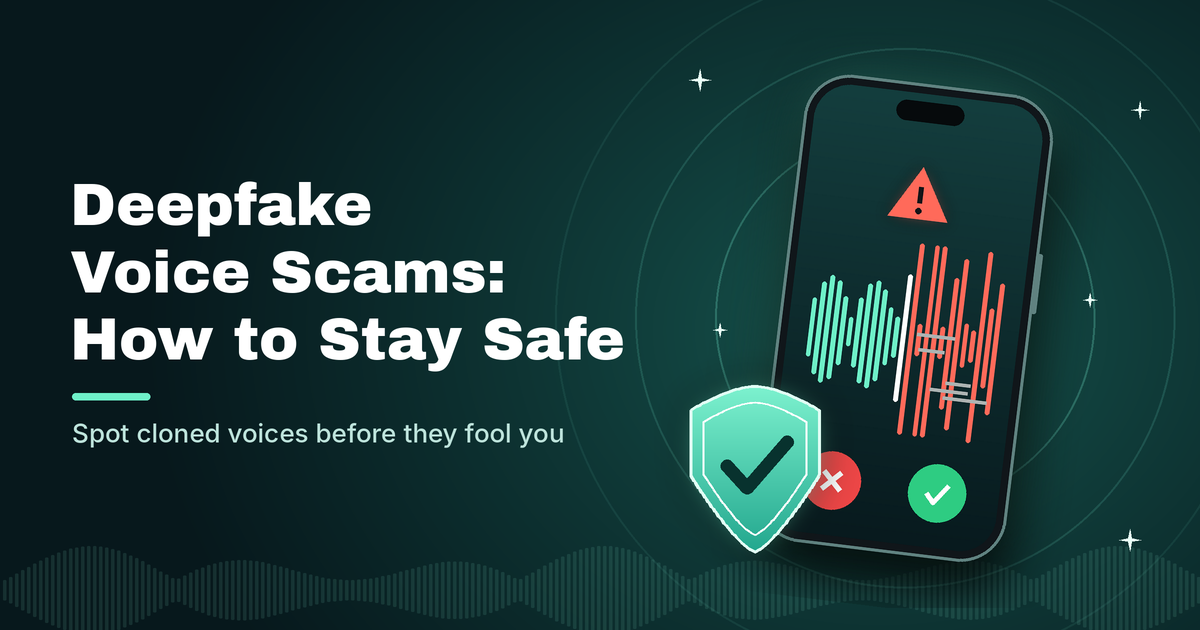
Deepfake voice scams are becoming a serious online security threat as artificial intelligence makes it easier for criminals to imitate real people. These AI voice scams can trick victims into believing they are speaking with family members, friends or trusted professionals.
The technology can have legitimate uses, but criminals can also use it for fraud, impersonation and social engineering. The FBI and FTC have both warned that AI-generated voices can be used to make scams more convincing.
How Deepfake Voice Scams Work
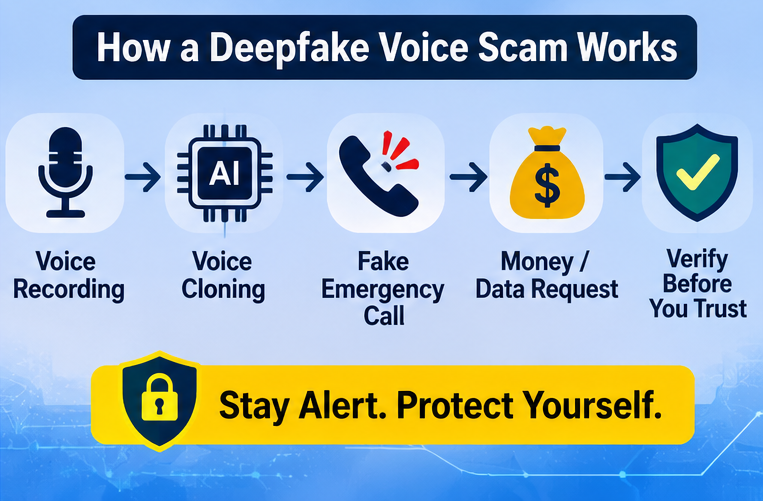
Deepfake voice scams usually begin with a voice recording collected from social media, videos or other online content. Criminals use AI voice-cloning technology to reproduce someone’s voice and generate realistic speech.
For example, a scammer might pretend to be a family member who urgently needs money. They could claim that they have been involved in an accident or are facing an emergency. The caller may sound almost identical to the person being impersonated.
Scammers can also impersonate company executives, government officials or other trusted individuals. In business-related attacks, criminals may use a cloned voice to request payments, sensitive information or access to accounts.
Warning Signs of AI Voice Scams
Recognizing AI voice scams can be difficult because modern voice-cloning technology produces surprisingly realistic sounds. However, certain warning signs can help people identify suspicious calls and avoid becoming victims of deepfake fraud.
Be especially careful when a caller:
- Creates an emergency and demands immediate action
- Requests money, cryptocurrency or gift cards
- Asks for passwords, banking details or verification codes
- Uses an unfamiliar phone number
- Tells you not to contact anyone else
- Becomes aggressive when you ask questions
- Gives unusual answers or uses unnatural wording
The FBI recommends paying attention to voice characteristics, tone, word choice and other communication details. However, because AI-generated content can be difficult to identify, verification is more reliable than simply trying to detect a fake voice.
How to Protect Yourself From Deepfake Voice Scams
Protecting yourself from deepfake voice scams requires awareness and careful verification. Even if a caller sounds exactly like someone you know, always confirm their identity before sending money or sharing personal information.
If someone calls claiming to be a family member, hang up and call their usual phone number. You can also contact another family member to confirm the situation. The FTC specifically recommends independently contacting the person instead of relying on the number or voice used by the caller.
Families can also create a private secret word or phrase that can be used to verify an emergency call. Avoid sharing unnecessary voice recordings publicly, and consider making social media accounts more private.
For more information about protecting yourself online, read our guide on AI scams and online fraud. You can also learn more about emerging social media trends in our Social Media Trends in 2026 guide.
For authoritative security guidance, readers can check the FBI Internet Crime Complaint Center and the FTC’s consumer advice on voice cloning. These resources provide additional information about AI-enabled fraud and reporting scams.
What to Do If You Receive a Suspicious Call
Deepfake voice scams are an emerging cybersecurity challenge as AI voice cloning becomes more accessible. Although these AI-generated voices can sound realistic, simple precautions can help protect your money and personal information. Always verify suspicious calls before trusting the caller.
If you already shared financial information or transferred money, contact your bank or financial service immediately. You should also report the incident to the appropriate authorities.
Deepfake technology will continue to improve, so deepfake voice scams may become harder to recognize. The safest approach is simple: never treat a familiar voice as proof of identity. Verify first, then act.
FAQs About Deepfake Voice Scams
What are deepfake voice scams?
Deepfake voice scams use AI voice-cloning technology to imitate a real person’s voice and convince victims to provide money, information or access.
Can AI really copy someone’s voice?
Yes. Modern voice-cloning systems can create highly realistic versions of human voices from relatively short audio samples.
How can I tell if a voice is AI-generated?
It can be difficult to identify a cloned voice by listening alone. Instead, verify the caller through an independently known phone number or another trusted communication method.
Should I trust a family member’s voice during an emergency call?
No. If the caller asks for money or sensitive information, independently contact the family member or another trusted person before taking action.