Pakistan Telcos Seek Cheaper Electricity for 5G Expansion
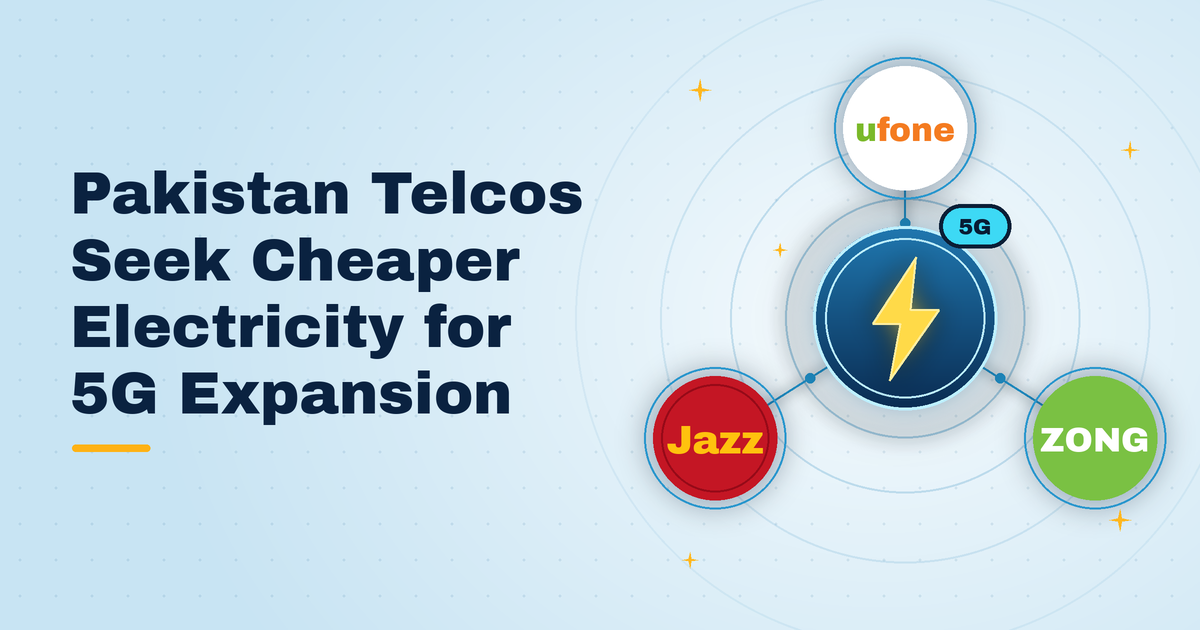
Pakistan telcos cheaper electricity has become a major demand as the country’s leading telecom operators push for lower power costs. Jazz, Zong, Ufone, Telenor and PTCL have approached Prime Minister Shehbaz Sharif, seeking industrial electricity rates for eligible telecom infrastructure. The companies say rising energy expenses could affect their planned $2 billion investment in 5G networks, fiber connectivity and digital infrastructure.
Jazz, Zong, Ufone, Telenor and PTCL have asked Prime Minister Shehbaz Sharif to allow eligible telecom infrastructure to receive industrial electricity rates instead of the higher commercial tariff currently applied to many telecom sites.
The industry says expensive electricity has become a major challenge at a time when mobile data usage is increasing and operators are preparing for the wider rollout of 5G.
Pakistan’s digital transformation also depends on the expansion of next-generation mobile networks. Read our detailed coverage of Pakistan’s nationwide 5G rollout to understand the challenges and opportunities surrounding the country’s upcoming connectivity upgrades.
The demand for cheaper electricity comes as Pakistan’s telecom industry faces increasing operational expenses. Pakistan telcos cheaper electricity could help operators manage their network costs while preparing for growing demand for high-speed internet.
Pakistan Telcos Cheaper Electricity: Why Operators Need Relief
According to industry figures reported this week, commercial electricity tariffs for telecom sites have increased by around 197% since 2018. Fuel expenses have also risen by approximately 300%, while average revenue per user has fallen by about 22%.
This combination is putting pressure on telecom companies to control infrastructure costs.
At the same time, the operators have committed approximately $2 billion over the next three years toward 5G deployment and fiber expansion. They are also investing in Tier-III and AI-ready data centers, which could further increase electricity demand.
Telecom Electricity Tariff: What Companies Are Demanding
The companies want the government to extend industrial electricity rates to licensed telecom infrastructure.
If that is not possible under the existing system, they have proposed creating a separate Digital/Telecom Infrastructure electricity category.
The proposed lower tariff would not apply to every property operated by telecom companies. Instead, eligibility would focus on infrastructure directly connected to network operations.
This could include:
- Telecom towers and BTS sites
- Switching centers and exchanges
- Fiber and FTTH nodes
- Data centers
- Network operations centers
Corporate offices, franchises, customer service centers and retail outlets would remain outside the proposed arrangement.
The operators say the savings would be directed toward 5G deployment, rural coverage and fiber expansion.
Lower Electricity Costs for Pakistan’s Telecom Infrastructure
The telecom companies also argue that lower electricity prices could benefit distribution companies.
According to their estimates, high commercial tariffs have encouraged operators to shift some infrastructure toward solar and other off-grid power solutions. They believe a more competitive grid tariff could increase their electricity consumption from the national network by 15–20%.
The industry estimates that this additional consumption could help distribution companies recover potential revenue differences within two to three years. However, these figures are industry projections rather than independently verified results.
Pakistan’s government has already been examining the issue. A joint task force involving the IT Ministry, Power Division, NEPRA, PTA, telecom operators and distribution companies was created to study industrial electricity tariffs and other power-related measures for telecom infrastructure.
The demand for Pakistan telcos cheaper electricity reflects growing financial pressure across the telecom industry. Operators believe that lower power costs would help them maintain existing networks while preparing for the increasing electricity requirements of 5G technology.
Pakistan 5G Expansion and the $2 Billion Investment
The electricity debate comes as Pakistan moves toward expanding its 5G ecosystem. The country completed its 5G spectrum assignment earlier this year, with operators securing spectrum for future network deployment.
For readers following Pakistan’s digital transformation, this development also connects with the country’s broader 5G and internet infrastructure expansion. You can internally link this section to your related article on Pakistan’s 5G rollout or another DigitalDips post covering mobile internet developments.
Affordable electricity could also strengthen Pakistan’s digital infrastructure. With the proposed telecom electricity tariff, companies may have more financial flexibility to expand fiber connections, improve rural coverage and develop modern data centers.
Cheaper Electricity and the Future of Telecom in Pakistan
The government has asked the relevant task force to finalize recommendations on the proposed tariff arrangement.
If approved, cheaper electricity could reduce operating pressure on telecom companies and potentially support faster investment in 5G, fiber and data centers. However, the final decision will depend on the government’s assessment of its financial impact on the power sector.
For now, the telecom industry is making its case that affordable electricity is becoming essential for Pakistan’s next phase of digital growth.
The Pakistan Telecommunication Authority (PTA) oversees the country’s telecommunications sector, including licensing and regulatory matters. Readers can visit the official PTA website for telecom policies, regulatory announcements and industry updates.
FAQs
Why are Pakistan telcos asking for cheaper electricity?
Telecom operators say rising commercial electricity and fuel costs are increasing the expense of running network infrastructure.
How much are telecom companies planning to invest?
The industry says it has committed around $2 billion over three years toward 5G, fiber networks and related digital infrastructure.
Which telecom companies are seeking the tariff change?
Jazz, Zong, Ufone, Telenor and PTCL are among the operators seeking industrial electricity rates for eligible telecom infrastructure.
Will telecom offices get cheaper electricity?
Under the proposal, the reduced tariff would target network infrastructure rather than corporate offices, franchises, retail outlets and customer service centers.
Could cheaper electricity speed up 5G in Pakistan?
Potentially. Lower infrastructure costs could give operators more room to invest in network expansion, fiber connectivity and 5G infrastructure.